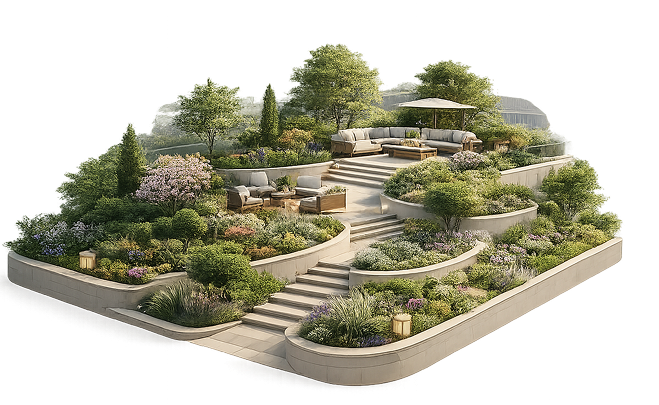
Timber rises in Clerkenwell
NEWS | CONSTRUCTION
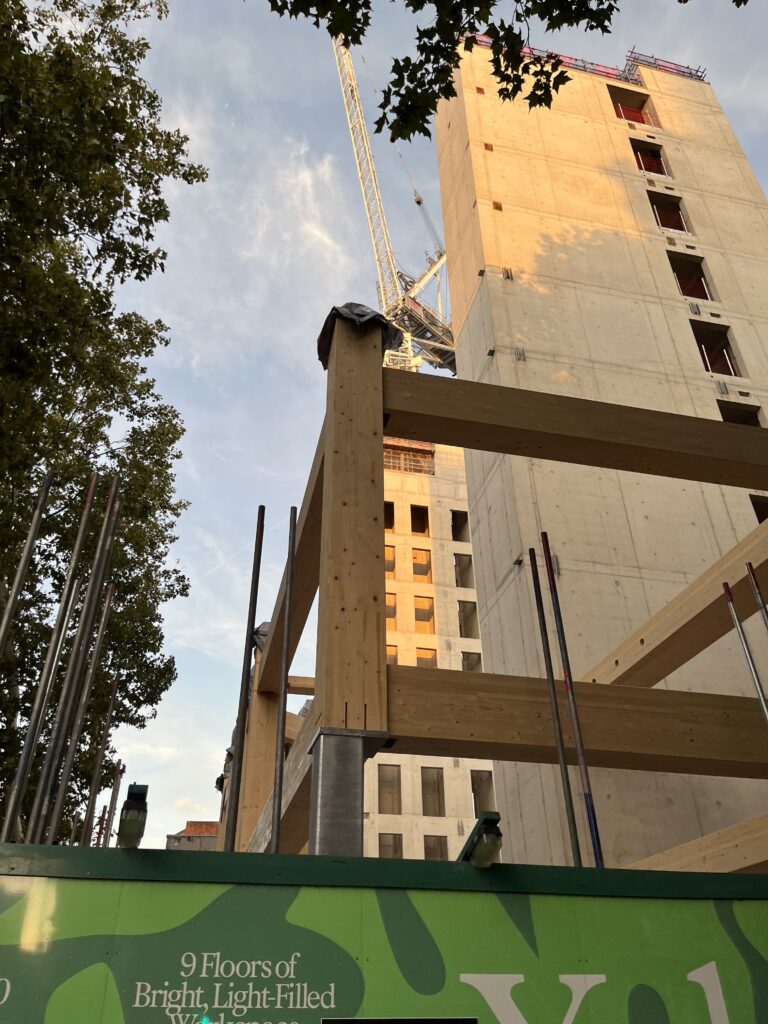
From forest to future workplace
The remarkable journey of a mass timber building.
Every mass timber building begins long before construction starts. Decades before architects sketch the first plans or cranes arrive on site, its story begins in a carefully managed forest. From there, it travels through one of the world’s most advanced manufacturing processes before becoming a workplace designed to inspire generations of people. This is the journey behind modern timber construction and why it represents a fundamentally different way of building.
“A single mature tree can absorb around 22kg of carbon dioxide each year while it is actively growing.”
Source: UK Forestry Commission
Every great building starts with nature
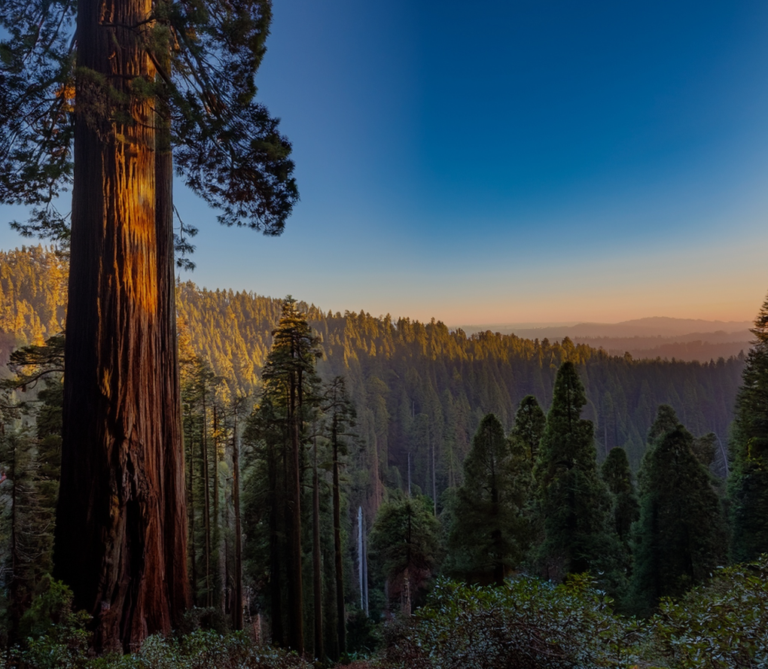
Walk through a mature forest and it’s easy to think nothing is happening.
In reality, every tree is quietly performing one of nature’s most remarkable engineering feats: capturing carbon from the atmosphere, producing oxygen and storing that carbon within its fibres as it grows.
Historically, construction has relied heavily on materials that release significant amounts of carbon during manufacture. Steel and concrete transformed our cities, but they also carry a substantial environmental footprint.
Mass timber offers another path.
Rather than beginning in a quarry or furnace, it begins in a renewable landscape that has often been carefully managed for generations.
It is perhaps the only major structural material whose story starts by removing carbon from the atmosphere.
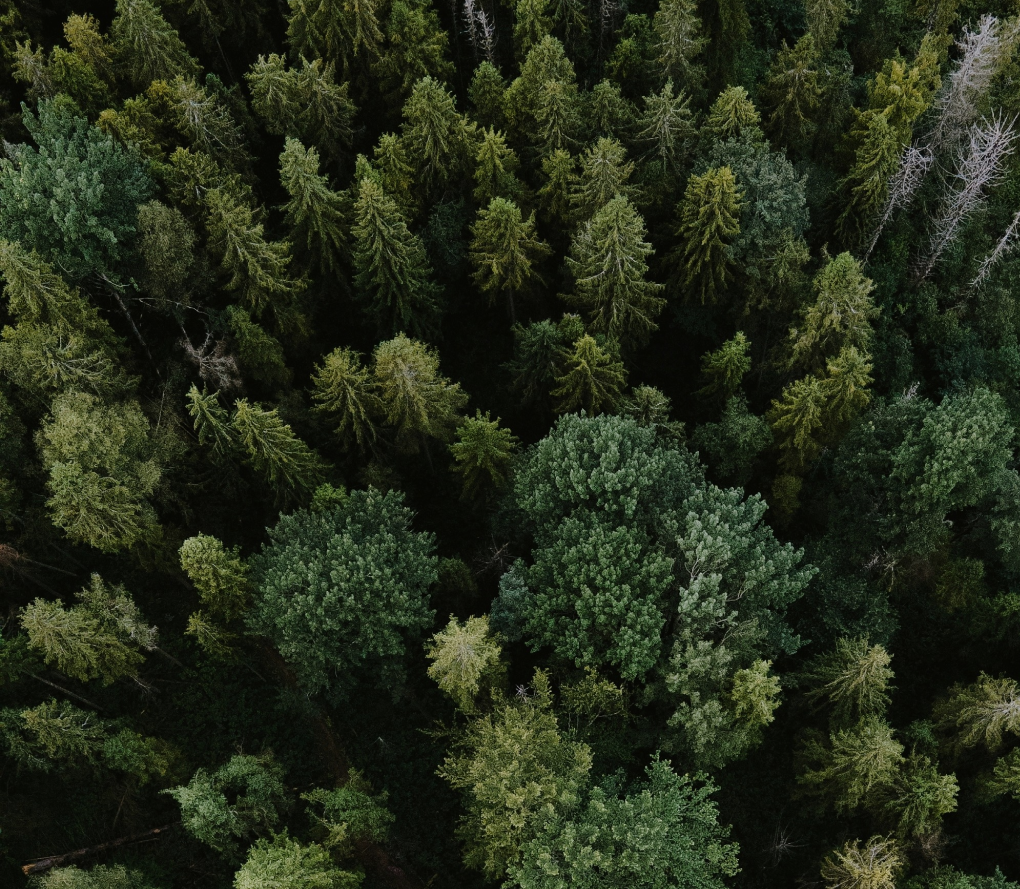
The forest is carefully managed, not simply harvested
One of the biggest misconceptions surrounding timber construction is that more timber buildings mean fewer forests.
Responsible forestry works very differently.
The majority of engineered timber used in modern commercial buildings comes from fast-growing softwood species, predominantly Norway spruce, together with European fir, Scots pine and, in some applications, larch. These species are ideally suited to structural use because they grow tall and straight, can be harvested within around 40-80 years depending on the species and location, and regenerate readily within sustainably managed forests.
Unlike ancient broadleaf woodlands, these productive forests are carefully cultivated in much the same way as any renewable crop. Foresters selectively thin younger stands to improve forest health, allowing the strongest trees to mature while increasing light and space for the next generation. Mature trees are harvested before their growth slows significantly, making room for newly planted saplings that absorb carbon at an even faster rate during their most active years.
This continuous cycle keeps forests healthy, productive and resilient, while ensuring a long-term supply of one of the world’s few truly renewable structural materials.
The objective is to grow healthier forests that will continue to capture carbon, support biodiversity and provide sustainable building materials for generations to come.
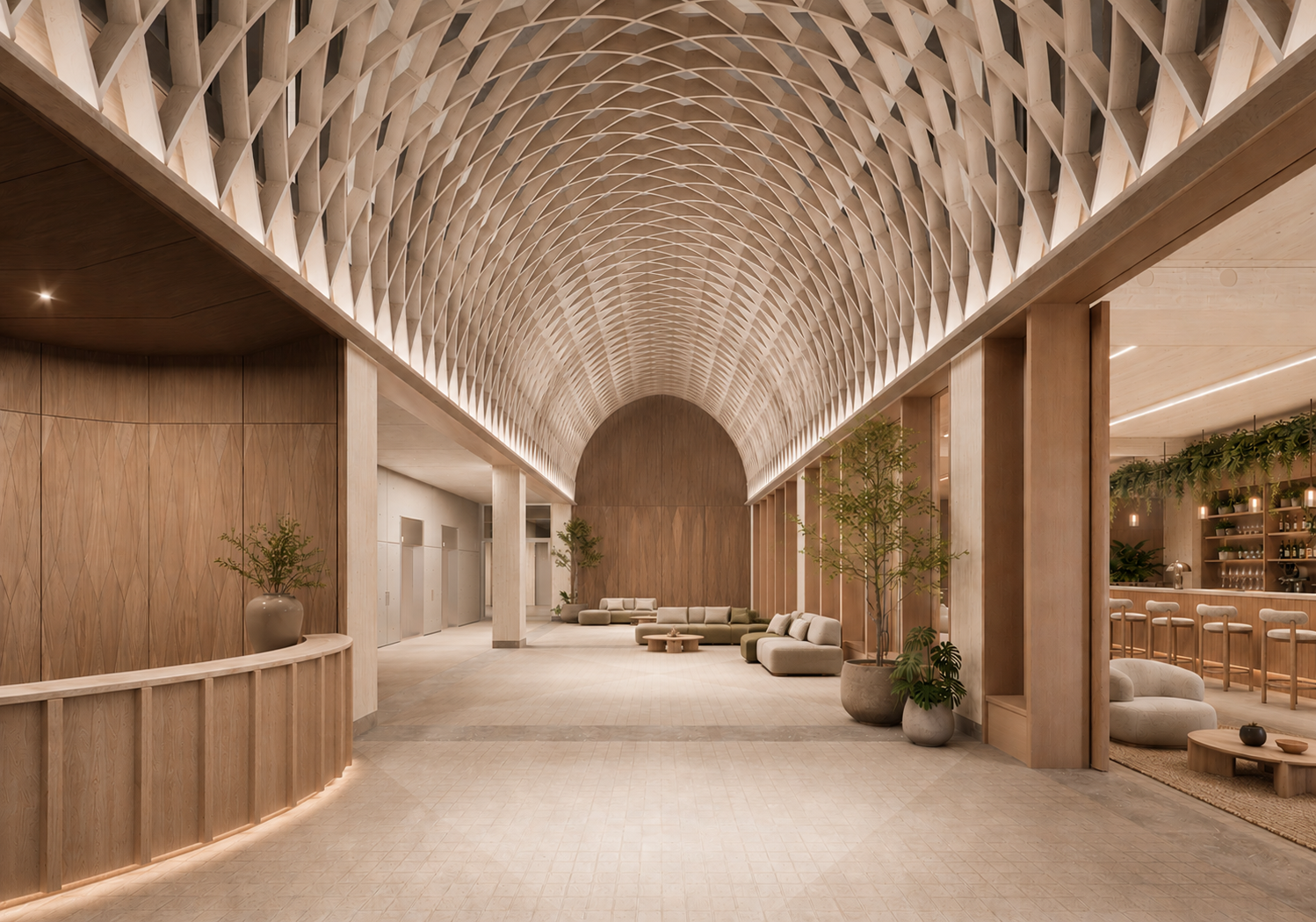
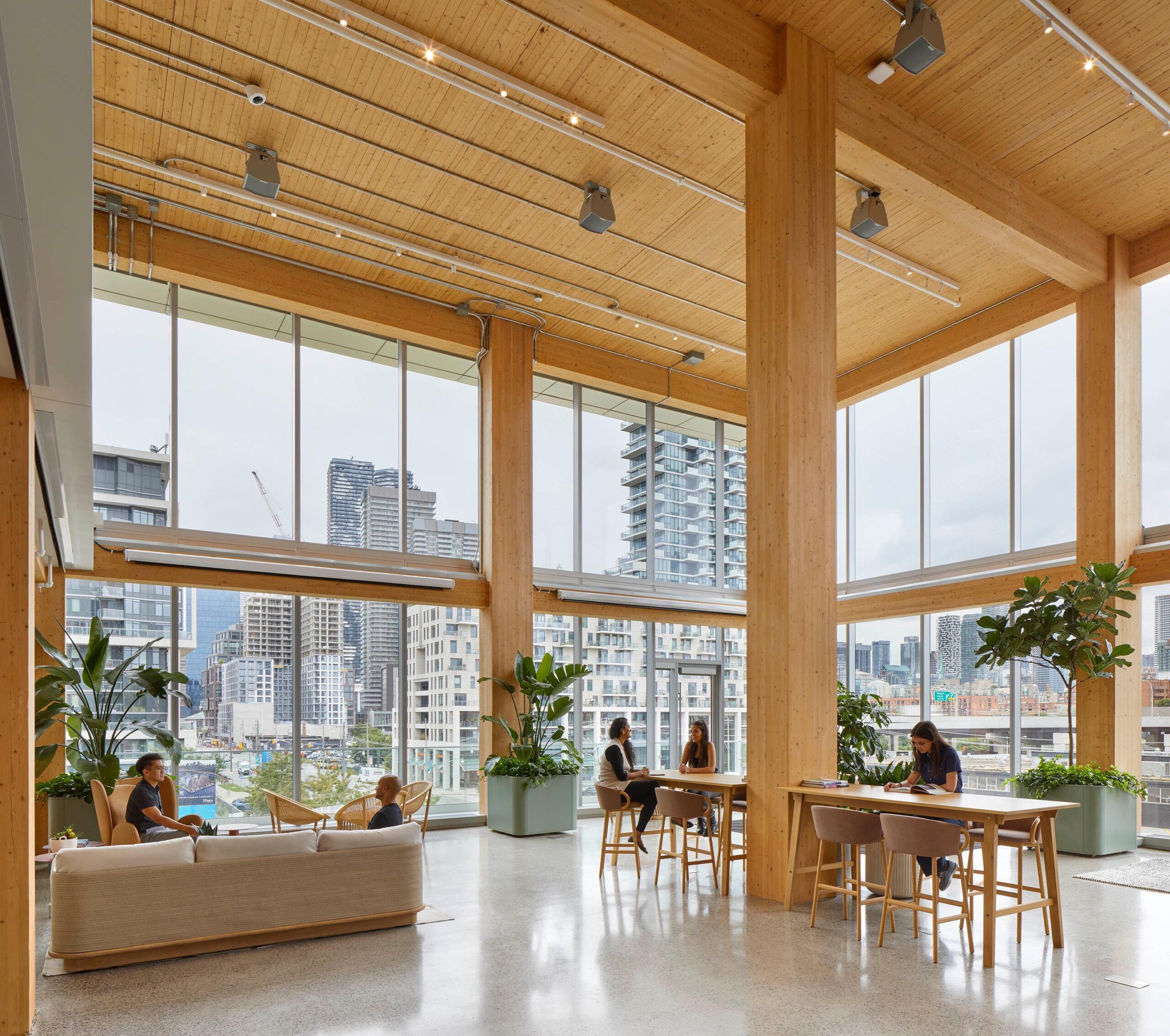
Precision engineering replaces traditional construction
Once harvested, the timber begins a remarkable transformation.
Structural-grade spruce and other softwoods are carefully dried, graded and bonded together to create high-performance engineered timber products such as Cross Laminated Timber (CLT) and glulam.
Using advanced digital modelling and computer-controlled manufacturing, every panel, beam and column is produced to millimetre accuracy before leaving the factory. Everything is pre-designed, precision-cut, and quality-checked long before arriving on site.
In many respects, the building has already been assembled digitally before the first delivery reaches site.
Traditional construction often requires multiple trades working simultaneously over many months.
But with mass timber, large structural components arrive ready for installation and are craned directly into place, almost like assembling an extraordinarily sophisticated kit of parts. This precision brings tangible benefits.
Construction programmes can be shortened. Waste is significantly reduced. Vehicle movements are minimised. Construction sites are quieter, cleaner and less disruptive for neighbouring communities.
But, perhaps most importantly, every component has already been manufactured to an exceptionally high standard before it ever reaches the site, shifting the emphasis to assembling expertly crafted components with speed and accuracy rather than building everything on-site.
More than a construction material
Once complete, the journey is far from over.
Unlike many conventional structural materials, exposed timber continues to shape the experience of the people who occupy the building every day.
Natural textures soften workplaces. Warm surfaces create a sense of comfort.
Visible timber provides a constant connection to the natural world, even in the heart of the city.
This is where the journey comes full circle.
A tree that began growing decades ago becomes part of a workplace designed to support future generations of businesses.