Timber rises in Clerkenwell
NEWS | CONSTRUCTION
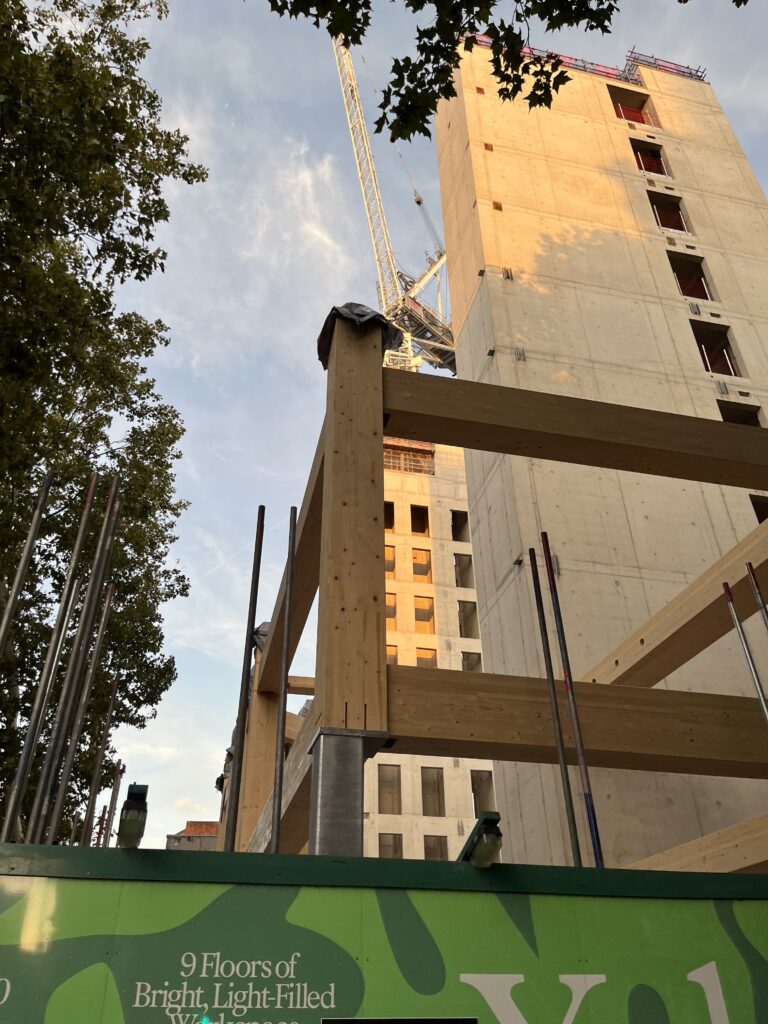
Building the future of work
How timber is shaping the next generation of workplaces.
For more than a century, steel and concrete defined the modern office. They enabled cities to grow upwards and businesses to expand at unprecedented speed. But the priorities shaping today’s workplace are fundamentally different. As organisations focus on attracting talent, reducing carbon and creating healthier places to work, a new generation of buildings is emerging – built not just for efficiency, but for people.
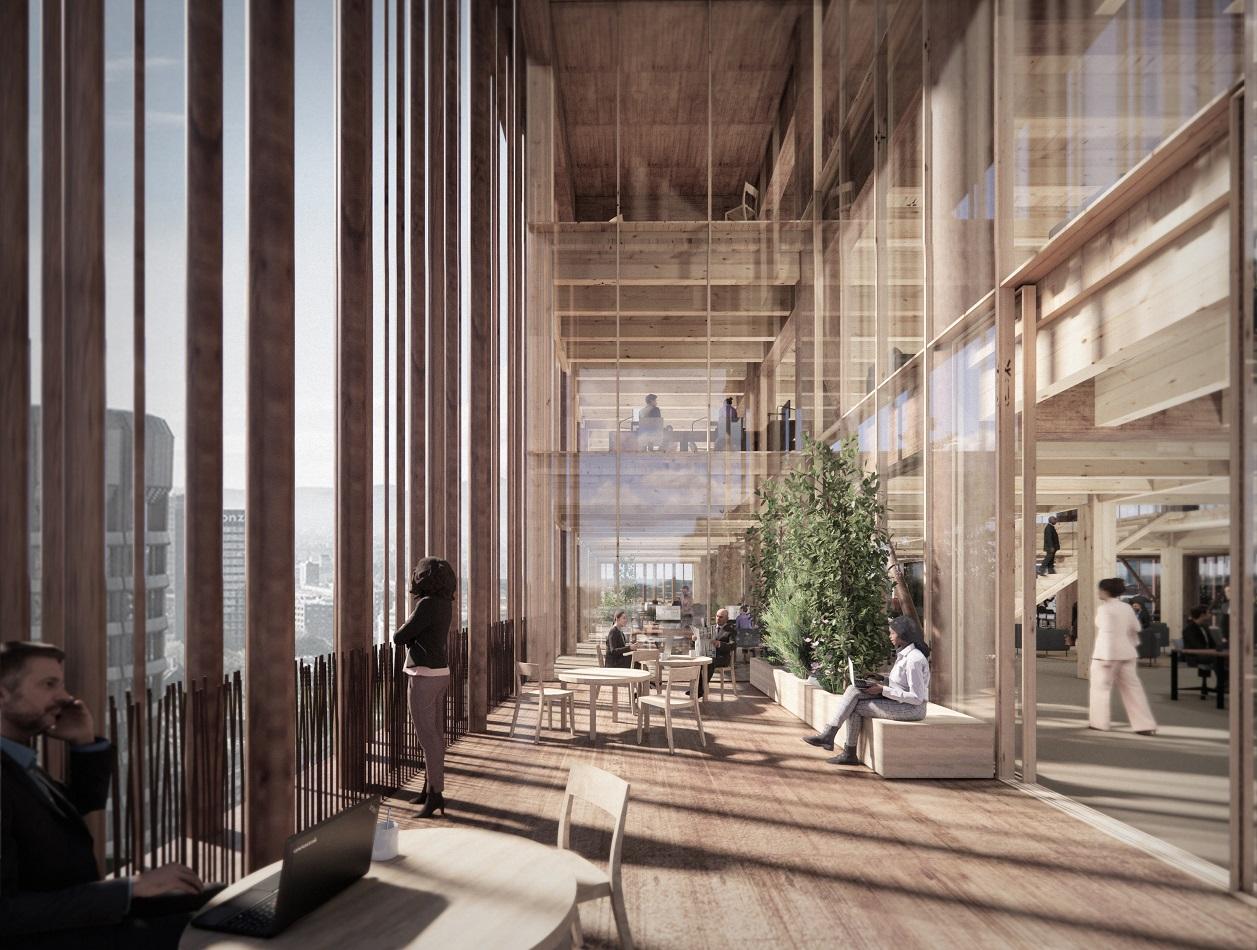
For decades, success was measured differently
The commercial office has always reflected the priorities of its time.
The post-war decades celebrated scale and efficiency. Buildings grew taller, floorplates became deeper, and materials such as steel and concrete enabled rapid urban expansion. The office was designed around productivity, with little consideration given to how people experienced the spaces they occupied.
Today, businesses are no longer looking simply for office space. They are looking for workplaces that help attract and retain talented people, strengthen culture, support wellbeing, demonstrate environmental leadership and remain adaptable as organisations evolve.
The workplace has become a strategic asset rather than a fixed cost, and that shift is changing the way buildings are designed.
The workplace as a brand extension
Hybrid working has fundamentally altered workplace expectations.
Employees no longer commute because they have to; they come into the office because it offers something they cannot easily replicate elsewhere. Collaboration, creativity, mentoring, learning and social connection have become some of the office’s greatest strengths.
As a result, organisations are placing greater emphasis on the quality of workplace experience.
Natural light. Cleaner air. Outdoor terraces. Flexible social spaces. Places to focus as well as places to collaborate. No longer considered premium extras, these features are increasingly expected by today’s workforce.
Research from the World Green Building Council has shown that workplaces designed around health, wellbeing and access to nature can contribute to improved employee satisfaction, productivity and reduced absenteeism. While no single design feature guarantees these outcomes, the evidence continues to reinforce an important principle: the environments we work in matter.
Carbon is a commercial issue
Environmental performance is no longer simply an ESG reporting requirement. Investors, occupiers and employees increasingly expect organisations to demonstrate meaningful action towards reducing emissions.
While operational carbon has received most of the attention in recent decades, embodied carbon – the emissions generated through the extraction, manufacturing, and transport of construction materials – is becoming an equally important consideration.
Construction and the built environment account for almost 40% of global energy-related carbon emissions, with embodied carbon representing a growing proportion as buildings become more energy efficient in operation.
Developers and designers are now reconsidering the materials used to construct the buildings themselves, and engineered timber is changing the conversation.
Unlike conventional structural materials, responsibly sourced timber stores carbon absorbed during a tree’s lifetime while requiring significantly less energy to manufacture than steel or cement. Used thoughtfully, it offers an opportunity to reduce embodied carbon without compromising quality, performance or design ambition.
The benefits of timber
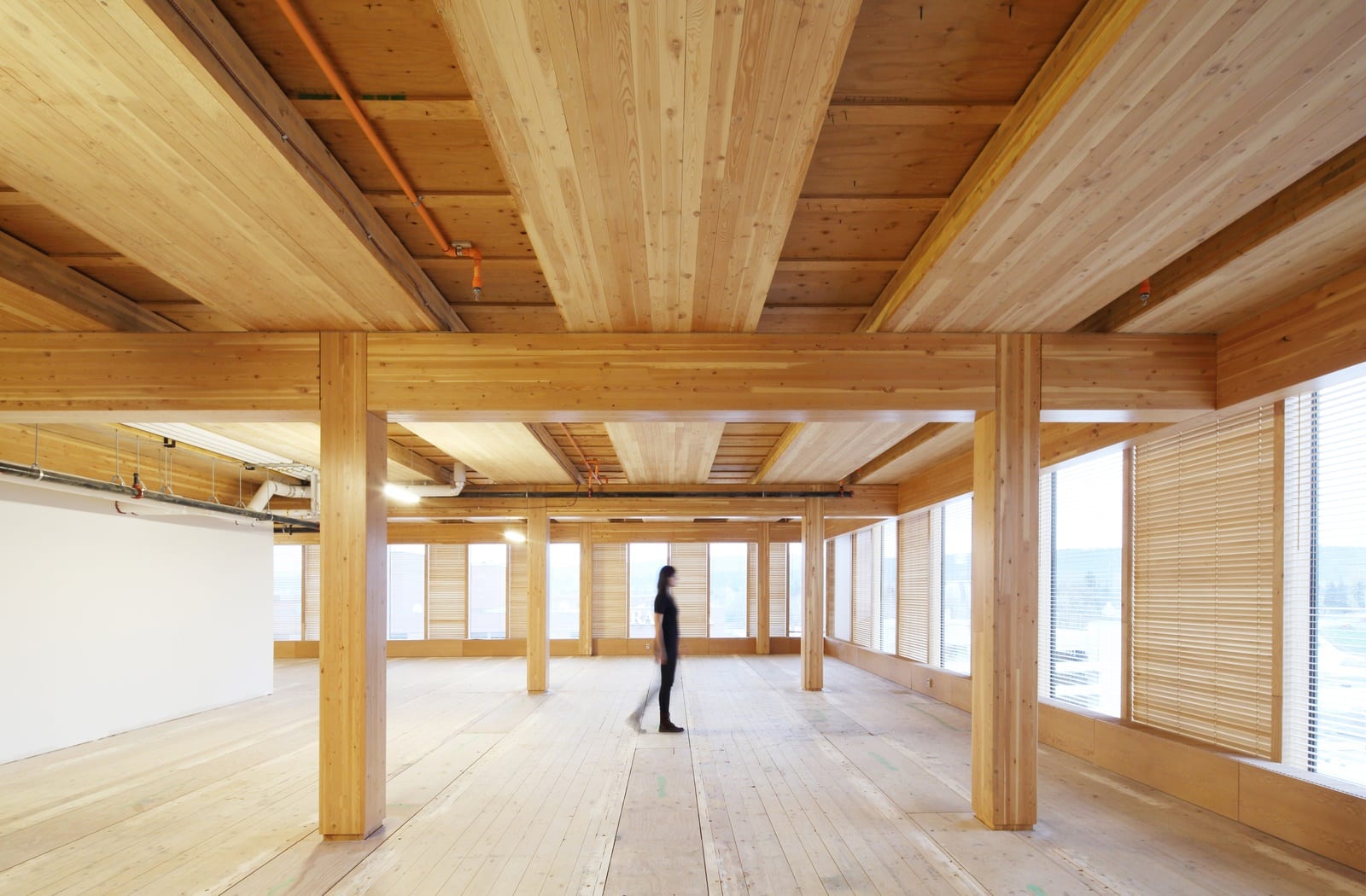
Modern mass timber bears little resemblance to traditional timber construction. Cross Laminated Timber (CLT) and glulam are precision-engineered structural products manufactured to exacting tolerances before arriving on site ready for assembly.
But the benefits extend well beyond sustainability.
Prefabricated components can reduce construction programmes, minimise waste, improve quality control and create quieter, cleaner building sites with fewer vehicle movements.
Equally important is the experience they create once occupied.
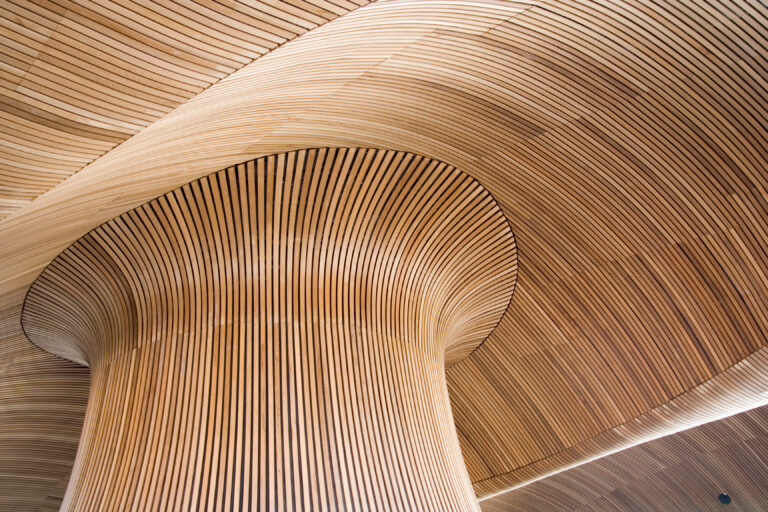
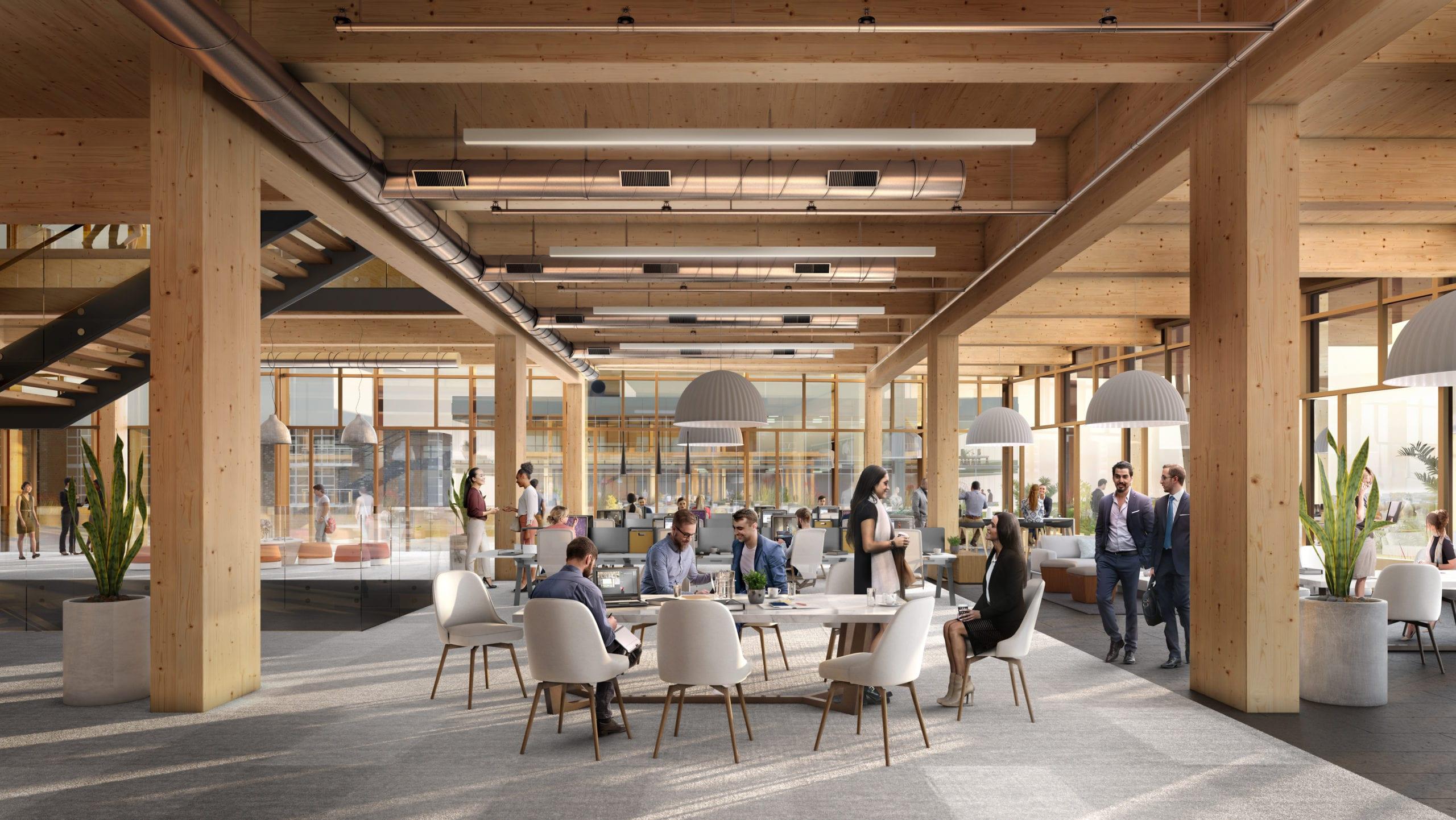
Exposed timber introduces warmth, texture and a tangible connection to nature that is difficult to replicate with more conventional materials. Increasingly, developers are recognising that these qualities contribute to workplaces that feel calmer, more welcoming and more human.
“Today’s workplaces need to do far more than provide office space. They need to support people, reflect company values and remain relevant for decades to come.”
– Josh Lawrence, Asset Management Director, Global Holdings